Thursday, 25 June 2020

When you have power and position


Remember George Floyd?  Recollect how the killing of George Floyd led to outrage around the world, triggering ‘BlackLivesMatter’ movement even on digital media. I put forward the custodial death of a father and a son held in police custody in Tuticorin, Tamil Nadu. They were held in custody by the Sathankulam police and media reports that the duo was allegedly thrashed by police officials.


Do these issues have something in common? Power and position. Abuse and misuse of power have become a normal thing. However, not to forget police encounters in the Hyderabad rape and murder case; also the encounter of Ramkumar involved in the Swati murder case that happened at our prominence. These cases did consist of brutal elements and in the end, we did cherish that justice has been done. Revisiting killing of George Floyd case, investigations were made at various levels, even third world countries spoke about the issue and police officials were charged and sentenced to imprisonment.

Cannot a commoner in India, at least within the state, expect such sentences towards those who abuse their power and put the lives of others in jeopardy beyond just suspension orders and transfers? A serious follow-up by media on such cases would help serve justice, I believe.

Wednesday, 3 June 2020

Uttama Villain- Revisiting its particulars


Penning specialties of the multi-layered film ‘Uttama Villain’. Saagavaram song popped up on my YouTube recommendations in recent times and yet again fell in love with the lyrics of the song. I had the desire to watch the movie once again. Maybe this was my sixth or seventh-time watch, I wanted to mark everything that I love about this movie.

The screenplay starts off displaying the celebrity life any top-notch artist enjoys in his/ her career and also how they had to keep even their habits private. Names of each character in this film are close to heart. We fell in love with Tamil names like Manoranjan and Margadarisi as they mean a lot more than they appear. Manoranjan plays the lead as an actor while Margadarisi, a director, is the creator of an actor in Manoranjan. As a baseline, the life of Manoranjan has been revolving around the conflicts between a director and producer being Margadarisi and Poorachandra Rao respectively. Varalakshmi, Wife of Manoranjan, and the daughter of Poornachandra Rao, rejoice how people love her husband while in conversation with her son, Mano. I love the characterization of every cast in the film right from the driver character to Yamini, Manoranjan’s love.

The introduction scene of Jacob Zachariah, all Manoranjan sees was the impact it would leave on his film career if his private life secrets come to light. Also, in the presence of Jacob at Manoranjan’s interview, the line of questions asked by the anchor all add emotions. After having diagnosed with cancer, Manoranjan expresses to Jacob Zach-ariah with nothing more than silence in guilt and the expressions he puts on his face looking at pictures of Manonmani are heart touching. Cannot deny the fact that we adored Jacob Zachariah much more when he responds to Manoranjan as he asks ‘You must have loved her’ and if ‘his’ daughter knows the truth.

As the play goes, Manoranjan has been diagnosed with an advanced stage of brain cancer. The way Manoranjan would see life from thereon is what the film is all about. To gratify his film career, he wants to do one last movie in Margadarisi’s direction. Though M S Baskar scenes had less of comedy, his role as Chokku Chettiar was a perfect blend with sarcasm and comedy especially when Manoranjan asks him to cancel his previous movie agreements. Margadarisi’s response to Manoranjan’s request to do a film is when we fall in love with his role. Margadarisi highlights Poornachandra Rao as the hijacker and king-maker. Instantaneous storytelling mission of Manoranjan and sighing expression of Margadarisi added beauty. A phrase I love about the scene was that he understands there isn’t much time left to express love, affection, and gratitude. (‘Kadhal, Pasam, Thank you, idellam solrathuku kuda time ila nu puriya arambikudhu’) As Margadarisi comes to know about the medical condition of Manoranjan, we are also shown how Dr. Arpana takes it personally as she breaks out while explaining. Disclosure of film association with Margadarisi with Varalakshmi and Poornachandra Rao by Manoranjan was emotive.

Manoranjan wants to come up with a comedy film as his fans would leave the theatre with laughter. They call the movie as Uttama Villain. Explicitly, every character in the film Margadarisi directs also goes in parallel with Manoranjan’s real life. Manoranjan’s character as Uttaman is portrayed as Mruthyunjayan, meaning the one who defeats death (immortal). Contradictory to his real life as he fights cancer. Characterization of Karpagavalli goes in line with that of Yamini’s character, Muttharasan with Pooranachandra Rao, Sudalaimuthu with Chokku Chettiyar, and Kaakapusundar with Jacob Zachariah.

We should talk about the screenplay of the movie, as Uttaman is identified as Mruthynjayan in Uthama Villain, Manonmani (Yamini’s daughter) gets to know about Manoranjan’s brain cancer in parallel. Their conversation about how much Manonmani adores Jacob Zachariah over Manoranjan and she resembling Yamini and yet mannerisms go in line with Manoranjan add loveliness. Manoranjan collapses as Manonmani highlights that Jacob Zachariah is a hero and real while she thinks Manoranjan is fake. Mentality of accepting what life brings to us is well expressed. Manonmani begins to have sympathy for Manoranjan as she gets to know about his cancer through Jacob Zachariah. The scenario as to why Manoranjan did not want to disclose it to Chokku Chettiyar also jelled well.

Chokku Chettiyar holds the letter Yamini wrote to Manoranjan and vice versa secretively. Whereas in Uttama Villain movie, Karpagavalli’s message seeking help from Senguttuvan, another king, as she is held captive reaches as it is meant to be. Portrayal of Uttaman as Mruthyunjayan and how the common people tests it appears to be humorous and yet speaks the sadistic and cruel qualities we possess.

There were a lot of metaphor references in the film. It includes the intermission scene where the fishes tremble at the edge of its life span while Manoranjan begins to show symptoms of advanced cancer like bleeding. As Chokku reads Yamini’s letter to Manoranjan, both the characters stand at the ends of title projected on the screen highlighting ‘Villain’. Manoranjan clears his makeup as Manonmani reads the letter he wrote to Yamini.

As Manoranjan discloses his health condition to his family, Varalakshmi gets to know accidentally through Chokku Chettiar. Conversation between Manoranjan and Mano is yet another epic. When the father asks what his son would like to do in future, the immediate response from him was ‘why now’ and yet the kid gets carried away as his father remembers he wanted to be a lawyer while he was at class three. We get moved as Manoranjan says he does whatever he forgot to do. Until then Mano seems disconnected from his father, he desperately conveys he want write a screenplay to show who his father is.

Varalakshmi collapses and her childlike talk at the hospital was when we fell in love with her once again. She quoted that we never understand the value of something unless we lose it. While the family experiences a setback knowing Manoranjan is dying, Saagavaram song features in Uttama Villain. 

The Saagavaram song in the film is an Andhadhi and Kamal yet again gave us a reason to fall in love with Tamil through this. This emotes me to talk about other songs and musicals in the movie. Every song stands unique in its own way with Gibran’s musical. A villupattu narrates the story of Arjuna merging with Theyyam and Iranyan, Pragalathan story features in Iranya Nadagam song.

Moving back to Manoranjan’s, there are small details given to every character that speaks about their personality. It includes the nature of Manoranjan’s driver who also holds the relationship of Dr. Arpana and Manoranjan confidential, Manoranjan’s passion towards cinema seeking perfection, the director in Magadarsini, Varalakshmi’s kindness, and Manonmani’s affection. Manonmani reads the letter addressed to Yamini and realizes the real face of Manoranjan. Manoranjan exclaims about his family tree, a collage in the background. As Manonmani and Mano get together, the poem that goes as the background score is exemplary. ‘En uthirathin vithai, en uyir uthirtha sadhai, veroruvanai Bhagavan ena poruthuduvena?’

This lyric suits the Uttama Villain movie as Muttharasan, Uttaman, and Karpagavalli enact Iranya Nadagam. Manoranjan’s health deteriorates at the sets of the film. When he is rescued as he falls on the ground, Manoranjan’s shadow seems to fears him to death symbolizing Yama’s arrival. While Arpana, Manonmani, and Mano mourn the demise of Manoranjan, his family at the hospital is pictured to have been enjoying the last cut of his film ‘Uttama Villain’ which is what Manoranjan wanted for the audience. The screenplay ends revealing that King Senguttuvan has been impersonating as Uttaman all this while to save Karpagavalli. And they unite unlike Manoranjan and Yamini.
A movie that emanates a lot of emotions, cherished now and forever. 

Tuesday, 3 March 2020

Right to Vote under law

The voting turnout percentage in the recent Lok Sabha elections was observed to be the lowest than the elections in 2014. Chennai recorded around 59% of votes only. Each day we keep complaining about issues in our city or country. We are desperately expecting change. But we do not recognize and appreciate that ‘voting’ is a change agent.

Voting in Democracy

Can we recollect the definition of democracy? Let us give emphasis to the phrase ‘by the people’ forming part of that definition. It is evident that the idea of democracy also revolved around ‘right to vote’. Waiving off the right would jeopardize the existence of our democracy.

Provisions related to vote by law

Article 326 of the Indian Constitution talks about suffrage and details who can be the registered voter. There was a sixty-first amendment which came up in the year 1989 entitling the citizens above the age of 18 years to vote. Initially, it was 21 years.

Section 62 under Representation of People’s Act, 1951, talks about the right to vote. An individual entered in the electoral roll is entitled to vote in that constituency. It also exemplifies on who should not vote and when votes would turn void. Right to vote is recognized as a legal right and not a fundamental right.

Need for suffrage

Suffrage is defined as the privilege of voting. One popular historical event that could help us understand the need for suffrage is the Suffrage Movement in the US. The objective revolved around the right of women to vote in the elections.

For instance, let us consider the board and annual meetings of the corporates. Agendas or proposals are put forward during those meetings and the opinions of the shareholders or board members are obtained either by show of hands or ballot voting. It signifies the interest of market players towards their business. When there is a need for suffrage to even decide any move in business, is it not wise to practice the same at macro level for the benefit of the society and the world?

Voting and expression

Is it not important to voice out your opinion? Law does not mandate the citizens to vote. However, we keep debating and fighting about the freedom of expression and we do not want to express our voice when it comes to elections. Especially in urban, Election Day is treated a rest day or a vacation. When we complain about our government, is it not our right to critically analyze and choose the party and hold ourselves responsible towards the state and the country.

An individual’s vote may not bring a difference. But the national feel should not be left at stake. When the opinion of individuals become a national attitude, change and development would become a consequential factor.

Need to choose wise

Our country has the largest population of youngsters and our constitution entitles individuals above the age of 18 to vote. Primarily, youngsters should turn up to vote as they are the future citizens. Their population percentage would surely leave a huge impact on the elections.

It is also important to make right choices. Public should be able to arrive at a reasonable decision. They should be well informed. They must equip themselves by critically analyzing and voice their support through vote for a better prospect. For the recent Lok Sabha Elections, there were enormous information before us on various media platforms including Facebook so as to educate us about the candidates in our constituency. Details of many independent candidates did circulate in our midst. Yet, we narrowed our view point. We still acknowledge the existence of only two major parties.

Lamenting part: Voter’s list

Voter’s list plays a key role as it decides the eligibility of an individual to vote over the Constitution of India or the Representation of People’s Act. Procedures to obtain the voting slip after verification at the pooling booth is itself a gargantuan task. Presently, the slip was made available online as a factor of relief. Yet, not all citizens could get access to internet. One another saddening pert is that many citizens do not own voter ID. Dereliction of the government as it did not emphasis on this rather than Aadhar could also be a resultant factor. Had we been pulled to a situation to link our Voter’s ID to all our bills, we all would own a Voter ID. Also, not all applicants has received their voter ID which is also negligence on the part of the government.

However, right to vote should be considered as a responsibility. Lawmakers considered voting as honor to the citizens and thus came up with such a framework. We are supposed to hold on to the system as there is nothing beyond law and our democracy is ‘of the people, by the people and for the people’.

Wednesday, 28 August 2019

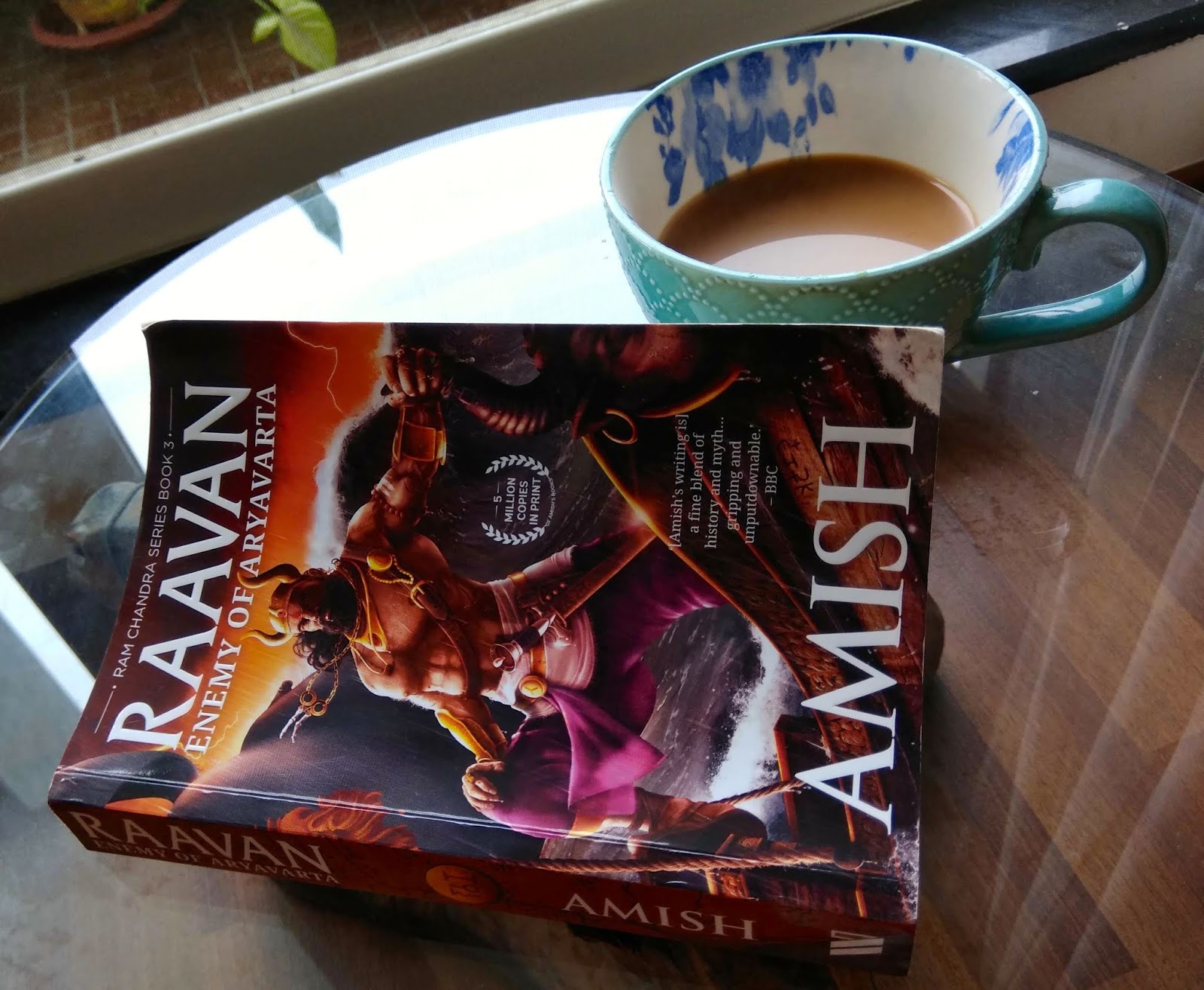
Reviewing ‘Raavan, Enemy of Aryavarta’

Work of Author Amish Tripathi

This book is a classic work.

If you are yet to read the book, I wish to keep you informed that this write-up has spoilers.

Don’t you think evilness in human is a cause-effect? Don’t you think external factors contribute to the rise of villains?


In general parlance, it is difficult to view a story from the perspective of a villain. Here, author Amish brought us the intense side of Ramayana from the angle of Raavan. I wonder how he had been able to consistently work on the same plot from three different angles forming up his Ram Chandra Series. He calls it challenging.

Raavan seems to have been an active musician (special mention: Veena and Hatha) and an artist. Book makes us rethink on what we had been acknowledging as wrongdoing. Focusing on the character sketch of Raavan, I had started to rethink if he had been really villainous. The character leaves his resident at the age of nine as he undergoes a lot of trauma being born as a Naga at his very own house. From a very young age, Raavan had been bundled up with responsibilities as he had to protect the life of his brother and mother. Kumbhakarna always came first in Raavan’s priority list before his mother. He makes money in all ways possible.

He gets to meet Vedavati. A personal favourite was the conversation Raavan has with Vedavati before she is been murdered. She makes him realize his potential, mankind and emphasizes on dharma. Following pages portrayed Raavan as a good-man in becoming. Subsequently, the death of Vedavati ignites violent nature in him. Her demise made him groan and turned him as a destroyer. Further, the depth of his villainous character is spoken through various instances covering his trade relations, tightened trade laws, swayamvar of Sita, the war against Mithila and others. I realize his monstrous nature is a cause-effect. The exemplary focus was given to detail on the use of Asuraastra and the impact it had on Kumbhakarna. It led to the defeat of the Lankans. After capturing Sita, his recognition of her identity was well expressed.

We the readers have to wait for the final book of this series to read about the trios, Ram, Sita and Raavan with details on the clash between Vishwamithra and Vasishta on the other hand.


Friday, 12 July 2019

Water from Jolarpettai to Chennai taps

“Water water everywhere, but not a drop to drink,” quoted Samuel Taylor in one of his work. With the latter part being the reality, we witnessed some optimistic posts on social media to visualize the former part of the quote believing the power of positivity.

We spoke cricket, politics, GST, inflation, and a thousand other things beyond the basic needs all these years. At least this period has made us complain about water scarcity and discuss conservation. The water level has drained in various parts of Chennai. Do we all recollect how Chennai was hit by flood previously? Where did the water go by? Do we have proper water reservoirs? Proud that we decided to act for it.

Day after day news on residents initiating ‘clean-up’ campaigns popped in including the Chitlapakkam lake restoration. I came across various social media posts discussing water supplies, minimizing the consumption level, and others. Luckily, there was no question of wastage as there was no possibility for the same. When the first spell of rain was expected, we did activities required to store the rainwater for our use.  Now, the water from Jolarpettai has arrived in Chennai.

Reportedly, 2.5 million litres of water has reached Chennai by train. The authorities claim that the arrangement is expected to serve us for the next six months ‘until the advent of North-East monsoon.’ Let us ensure we meet our needs and not greed. What nature can do to a man is inevitable. Let us continue to practice sustainable development. Let us always remember we owe our future generations.

Wednesday, 10 July 2019

Agatha’s ‘A Murder is Announced’


One of my favorites from Agatha Christie. Her thriller and mysteries are incomparable. This one featuring the fictional character Miss Marple is woven with an interesting plot. Primarily, I fall for the titles of her books. Isn’t “A Murder is Announced” daring?

The novel starts with an advertisement in the local newspaper announcing a murder at Little Paddocks on 29th October. Though the death of Scherz at the gathering is initially believed to be a suicide, the inspector Craddock proved his brilliance by solving the murder case arresting Letitia Blacklock.

The fun in arranging a birthday party for Bunny was engaging. The cake baked by the cook is wittily nicknamed as ‘Delicious Death.’ It is more of an oxymoron. Though it all added to the fun factor, another death hits the house costing the life of Bunny. I would say that the novel had collective emotion.

A thrilling read!


Celebrating music: Chithirai Thiruvizha 2019


To the performers, the two best things about musical events are learning and practices.

One of the two grand events conducted every year by the SAIFINE ARTS is the Chithirai Thiruvizha. The students are awarded for their performances in the music grade exams conducted annually at this event. The number of students who get facilitated at this occasion always amazed me. I had the opportunity to see what it takes. Our ideal Guru Nellai M Vinayagamoorthy gave us the opportunity to teach basics at the class and I observed how the Gurus train the students, test them periodically and appreciate these budding artists.

I still remember a class hour at which our Guru cited to use the chance of teaching other students through which we will improve collectively. Special thanks to Guru Nellai M Vinayagamoorthy for believing in us and allowing us to handle classes. It definitely helps us grow. I had to listen to various lessons I didn’t know in the first place. I go directly to any of the Gurus including the two brilliant violinists, Ms Sai Priyadharshini and Ms Sai Meenalochani.  I learn and then help the student who learns a particular lesson.

We had an instrumental concert at the start of the Chithirai Thiruvizha event. Every performance including that of seniors has put a ‘wow’ emotion. Each practice session is a fine memory. For the instrumental concert, I paired with my sister- herself on violin and me- veena. I take joy in mentioning that we never lose out on opportunities as our Gurus and our beloved parents always encouraged us to pursue it. Thanks do not equalize the teachings and support we received from Guru Nellai M Vinayagamoorthy and Guru A Vishwamithran. The ‘you people are improving’ report from our Guru Nellai M Vinayagamoorthy post the event meant a lot to us.

I never thought I would equally practice Carnatic vocal too. The consistent practice sessions for various concerts developed the interest, I must mention. Speaking of the vocal concert of this Chithirai Thiruvizha, we learnt songs in various ragas namely Keeravani, Hamsadhwani, Kapi, and others. This time the opportunity coupled with responsibility. I was instructed to assist the kids while practising bhajans. It made me ensure I learn every song right. I used to seek my sister, Archena, to rehearse the songs as she is skilled at this than myself. I remember the first practice session with the kids at which we sang Krishna Krishna Manamohana, a bhajan in Kapi raga. I used to ask myself if I’m doing it right. I recollect, I requested Ms Sai Priyadharshini to check if we are singing it in the way it should be. I must say that the whole sessions I had with those kids were always interesting. I admit that they know most of the lyrics by heart while we adolescents always have a lyric note to support. When I shared such experiences at home, my mother came with a witty statement saying “You should practise at home too, in the morning. Not sufficient when you do it only in class.” Realizing mom is always a mom, I would go silent. I rejoice the session of practice sessions we used to have at 8 pm with extra attention.

Practising Ayi Giri Nandini, Vinayaga in Hamsadhwani, Rama Kodanda Rama in Bhairavi and all the other songs were exciting and challenging. Varum Ondru in Sudha Dhanyasi raga gets a special mention because every time we sing it, the chittaswaras that comes in the song always puts a smile on my face in the memory of my elder sister. We have a memory lined to it. Let the mention of it here put a smile on her face too as she reads it. We had a lot of learning and practice sessions. Sincere thanks to Guru Nellai M Vinayagamoorthy for teaching, supporting, and encouraging us in all possible ways and grateful for the extended opportunities in all forms.

Realizing I have a long way to go and cherishing the journey.
Happy music!